OCHTA10 Long-Line Endoscope Camera Module


Product Videos
Downloads
OCHTA10 Long-Line Endoscope Camera Module
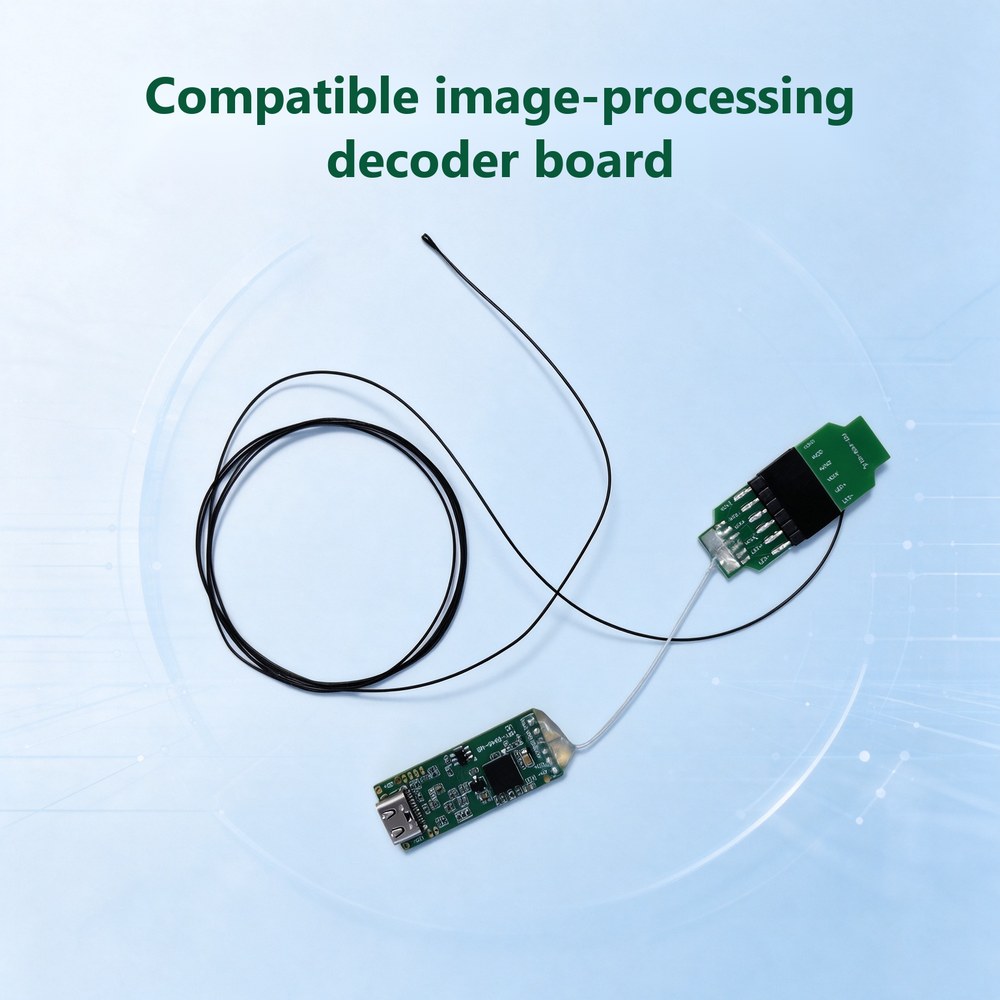
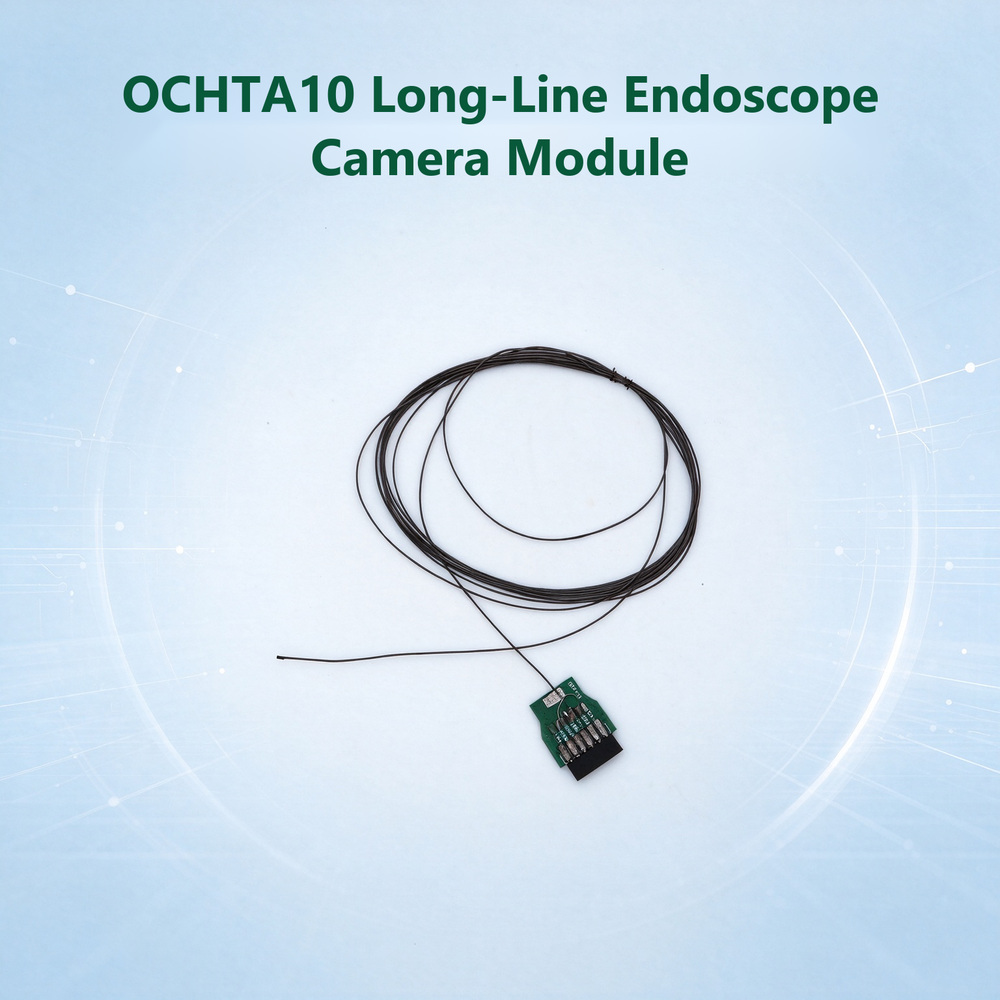
Note: The OCHTA10 image sensor is a purchased component; the entire long-line probe, cable processing, probe assembly, tuning and finished-product testing are completed in-house. The probe can be packaged into a 1.0–1.5 mm outer-diameter long-line module, with cable length made to order at 2–3 m. The lens is fixed and cannot be customised or replaced. The module can be matched with a UVC image-processing decoder board, supporting full-process custom development for customers including mechanical structure, LED and connector. Important: the sensor itself cannot be autoclaved; the manufacturer has not performed fail-safe validation for Class III life-critical medical devices. If used in human clinical equipment, the customer must complete the complete device's sterilisation, performance, safety and registration certification; we provide only the imaging camera module hardware.
Ultra-compact CubeChip imaging enabling a 1.0–1.5 mm ultra-fine probe outer diameter. It uses the OmniVision OCHTA10 CameraCubeChip® chip-scale packaged sensor with a 1/31" optical format, PureCel®Plus-S back-illuminated pixel technology and a 400×400 square imaging format. The tiny sensor allows the probe to reach a 1.0–1.5 mm outer diameter for access to extremely narrow cavities. The lens is fixed at the factory and cannot be customised or replaced. Native diagonal field of view is 120°±6°, with a depth of field of 3–30 mm for close-range intracavity observation. Enhanced NIR sensitivity, zero blooming, low noise and low power consumption make it well suited to disposable ultra-fine endoscope products.
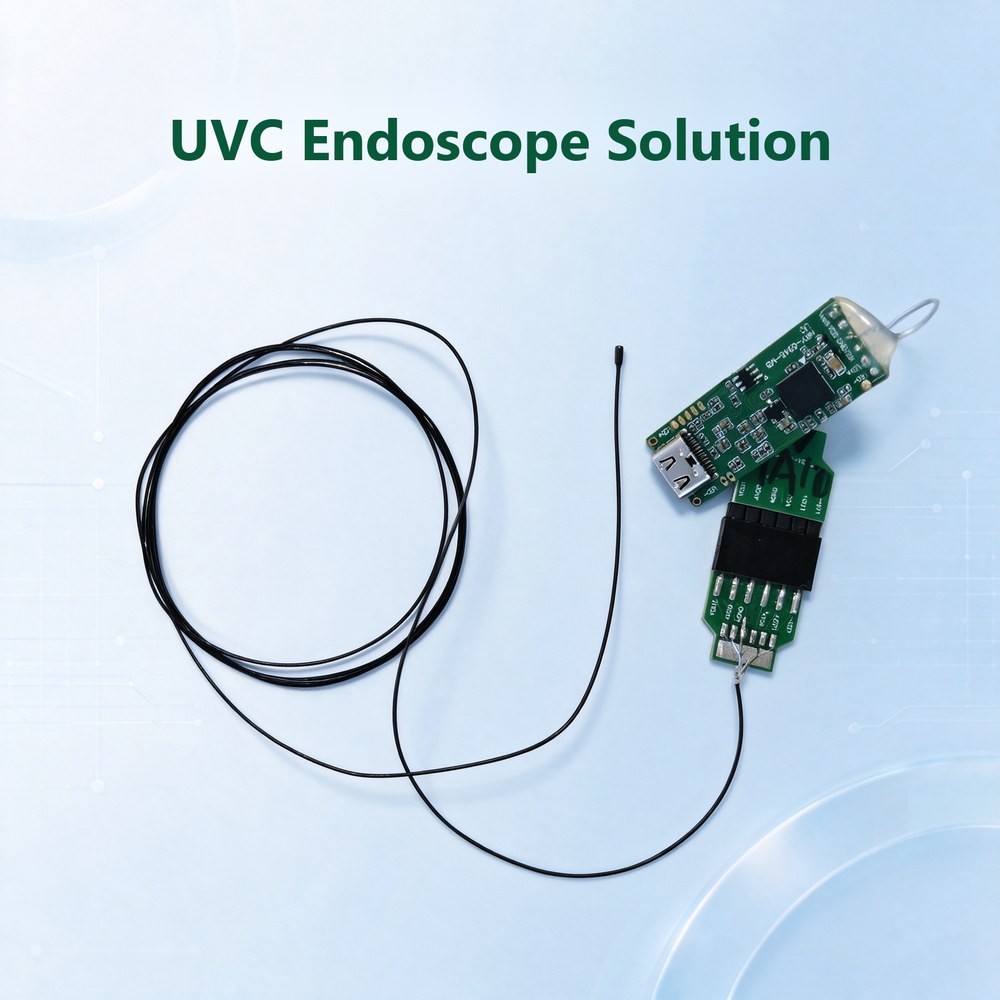
Analogue VOUT long-line output supporting stable transmission over 2–3 m. The module uses analogue VOUT video output; the chip natively supports a maximum drive distance of 4 m, and this module is supplied with a 2–3 m custom cable. We perform impedance matching and signal-integrity tuning for long analogue cables, reducing attenuation and noise. The module can be matched with a UVC image-processing decoder board to convert analogue signals to digital images, enabling rapid setup of a complete endoscopic imaging system.
Fully customisable mechanical structure (except the lens)
Probe housing is available in stainless steel tube or copper tube; rigid tube section length is made to order; the probe end face supports grinding and chamfering, reducing insertion snagging risk and improving safety.
Total cable length is fixed at 2–3 m to order; cable diameter can be selected as required; tail connector model and cable exit method can all be customised to the complete device.
Compatible with rigid, flexible and spring-tube endoscopes in multiple mechanical forms, focused on disposable ultra-fine endoscope solutions.
Flexible illumination customisation. The full LED light source can be customised, including LED count and type, with series and parallel circuit schemes supported. The chip supports pseudo-global-shutter LED mode; with an external clock it enables strobe exposure, effectively suppressing rolling stripes and motion smear under LED illumination and suiting intracavity LED fill-light scenarios.
Flexible SPI register control for easy development. All sensor registers are configured through the SPI serial interface; software reset, independent exposure and gain adjustment are supported; customers can develop AE auto-exposure and AGC auto-gain algorithms with the back-end controller. The on-chip PLL requires only an external 4 MHz clock, simplifying peripheral circuitry for extremely small probe layouts.
Complete in-house production and delivery system. The sensor is purchased externally; probe assembly, cable crimping and soldering, signal tuning, burn-in and finished-product testing are all completed in-house. We provide requirement evaluation, sample prototyping and delivery from small batches to mass production, and can support customers in SPI register tuning for rapid complete-device integration.
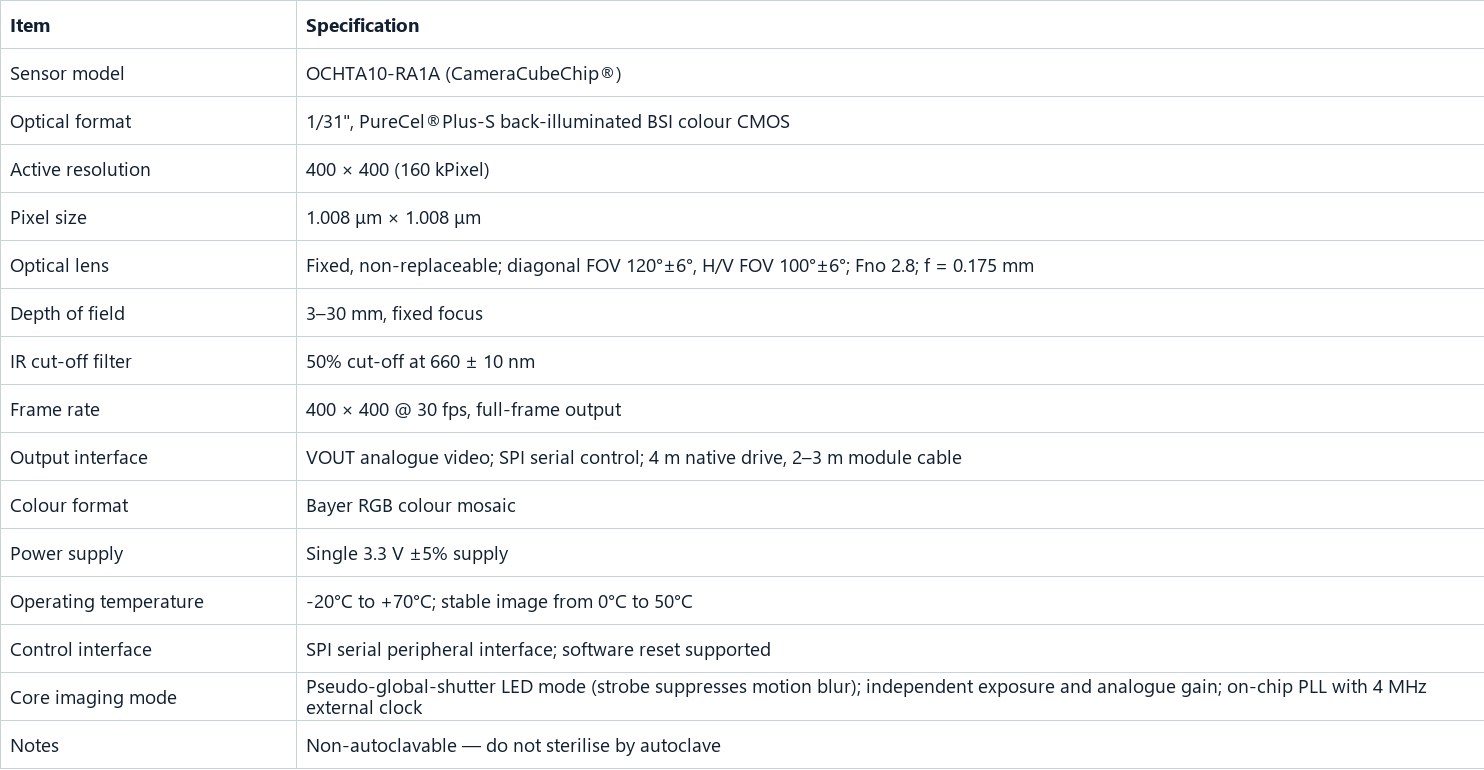
Core Imaging Sensor Specifications (OCHTA10-RA1A)
2. Mechanical Structure Customisation Parameters
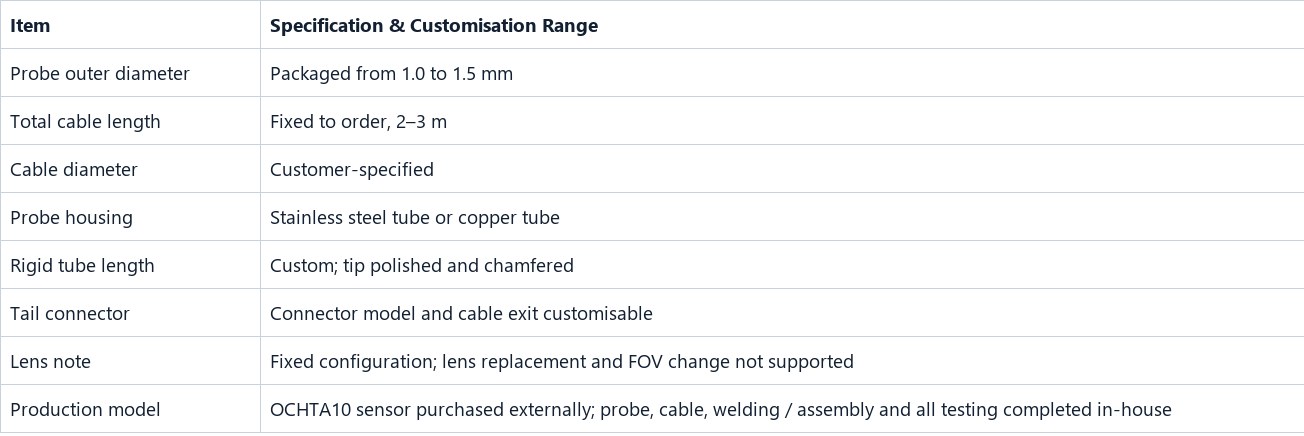
3. Optical & Illumination Customisation Parameters

4. Hardware Integration Capabilities
Image output: VOUT analogue output, can be matched with a UVC image-processing decoder board to convert analogue to digital images and rapidly set up a complete endoscopic imaging system.
Long-line optimisation: impedance matching and signal-integrity tuning for the 2–3 m cable reduce transmission noise and ensure stable image output.
Control interface: SPI interface reads/writes registers for exposure, gain and mode-switch tuning.
5. Core Product Functions
Fixed-frame output: 400×400 full-frame output at 30 fps, square imaging format, suited to endoscopic observation fields.
Pseudo-global-shutter LED mode: the input clock controls strobe exposure, effectively eliminating motion smear and rolling stripes under intracavity LED illumination; an important practical function for ultra-fine disposable endoscopes.
Independent exposure and gain: exposure time and analogue gain can be configured independently through SPI; software reset is supported for AE and AGC algorithm development.
Single-supply design: only a 3.3 V supply is required; with the on-chip PLL and a 4 MHz external clock, the probe needs very few peripheral components and fits extremely small spaces.
Long-distance analogue transmission: impedance matching is tuned for the 2–3 m cable to provide stable analogue output; a back-end UVC decoder board converts it to digital images.
※ Typical Applications
Important: the manufacturer has not performed fail-safe validation for the OCHTA10 in Class III life-critical medical devices. If used in human clinical equipment, the customer must complete the complete device's performance, safety and registration certification; we provide only the imaging camera module hardware.
✅ Medical field
1. Human clinical endoscopes (focused on ultra-fine disposable endoscopes)
Compatible devices: bronchoscopes, uroscopes (cystoscopes, ureteroscopes, nephroscopes), ENT endoscopes (otoscopes, rhinoscopes, laryngoscopes), hysteroscopes, dental scopes and other ultra-fine-diameter endoscopes. Applicable departments: respiratory medicine, urology, ENT, stomatology and gynaecology. Product-form fit: focused on disposable and semi-reusable endoscope solutions; compatible with rigid, flexible and spring-tube endoscope structures; the 1.0–1.5 mm ultra-fine probe outer diameter is suitable for access and inspection in extremely narrow cavities.
2. Veterinary medical endoscopes
For small-animal clinics and livestock veterinary equipment; used for animal ear canals, respiratory tracts, urinary cavities and oral inspection; suited to veterinary ultra-fine bronchoscope and uroscope imaging modules, ideal for disposable veterinary endoscopic products.
✅ Industrial inspection field
Internal inspection of ultra-fine tubes, cavity inspection of precision micro-parts, defect detection in micro-gaps; observation of micro-pipe and miniature-mould cavities; micro-component defect detection; special portable ultra-fine inspection equipment.
✅ Product-form adaptation
This OCHTA10 long-line endoscope camera module has a probe outer diameter that can be packaged to 1.0–1.5 mm, a cable length made to order at 2–3 m, and a fixed non-replaceable lens; it can be matched with a UVC image-processing decoder board.
Rigid-tube option: stainless steel / copper tube rigid probe, suited to rigid-access scenarios such as ENT and oral.
Flexible / spring-tube option: spring-sheathed long-line structure, suited to bronchoscopy, uroscopy and other scenarios requiring flexible access into extremely narrow cavities, especially disposable flexible endoscopes.
✅ Product overview
The OCHTA10 long-line endoscope camera module is developed on a 160 kPixel CameraCubeChip® ultra-compact imaging chip. The probe achieves a 1.0–1.5 mm ultra-fine outer diameter and supports 2–3 m analogue long-line transmission; the lens is fixed at the factory and cannot be replaced; the pseudo-global-shutter LED mode resolves motion smear under LED illumination. It fully covers three major directions — disposable human clinical endoscopy, veterinary endoscopy and precision inspection of tiny industrial cavities — and supports rigid, flexible and spring-tube endoscope forms, fitting bronchoscopes, uroscopes, otoscopes, dental scopes and other ultra-fine endoscopic devices.
✅ Customisation and integration
The OCHTA10 imaging sensor is purchased externally; module cable processing, probe assembly and the full test suite are completed in-house. Customers may provide requirement parameters including probe outer diameter, total cable length (fixed at 2–3 m), metal tube material and length, LED configuration and interface board requirements (the lens is fixed and FOV cannot be modified); we can provide solution evaluation, sample prototyping through to mass production supply.
Service Advantages
- Full-chain technical service capability covering image processing, hardware and application layers, with SDK and API protocols;
- Fine medical-grade and industrial-grade image tuning services, plus function and PCBA customization;
- Fast response: technical support and sales centers in East China (Suzhou) and South China (Shenzhen), serving the Yangtze River Delta and Pearl River Delta nearby;
Over 20 years of image-processing experience and more than 10 years as a core supplier of endoscope image-processing decoder boards, with technical-support experience serving 100+ endoscope companies;
-
Full-chain technical service
Covering endoscope image processing from hardware to the application layer;
-
Cross-platform coverage
Full-chain customization from decoder board to mainboard to APP, covering Windows, Android, Linux and iOS as well as ARM and x86 platforms;